
Key Takeaways:
- The rising stakes of urban climate risk: According to late-2025 climate modeling by Zurich Resilience Solutions, six major Southeast Asian cities—including primary MICE hubs like Singapore, Bangkok, Jakarta, and Kuala Lumpur—face escalating exposure to extreme heat, coastal flooding, and sudden windstorms. This makes even a "small" outdoor corporate event highly vulnerable without a basic weather plan.
- Simplicity over complexity: Corporate events rarely have a dedicated, full-time weather-monitoring team. This makes a simple, low-overhead intelligence workflow more valuable, not less necessary.
- Right-sizing the response: A half-day company offsite needs a small number of clear thresholds and one person with the authority to call it—not a festival-scale contingency operation.
- Proactive vendor alignment: Sharing a threshold plan with vendors (catering, AV, furniture) in advance avoids chaotic, last-minute scrambling when conditions shift.
- Protecting the attendee experience: A backup plan engineered in advance feels like an intended experience. A hastily repurposed indoor hallway feels exactly like what it is: a downgrade.
- The technology layer: For smaller events, a simple hyperlocal dashboard checked at set points is the right investment. For recurring events, a one-time API pull of historical conditions can set sensible, reusable thresholds.
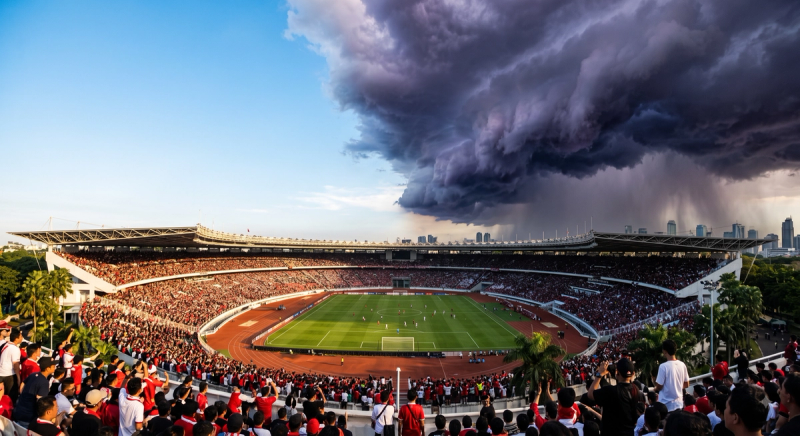
Corporate and community events are high-stakes investments. Months of planning, significant budgets, and crucial brand reputations are poured into a few hours of execution. Yet, despite the financial and reputational weight they carry, corporate events rarely have a dedicated production team monitoring weather full-time.
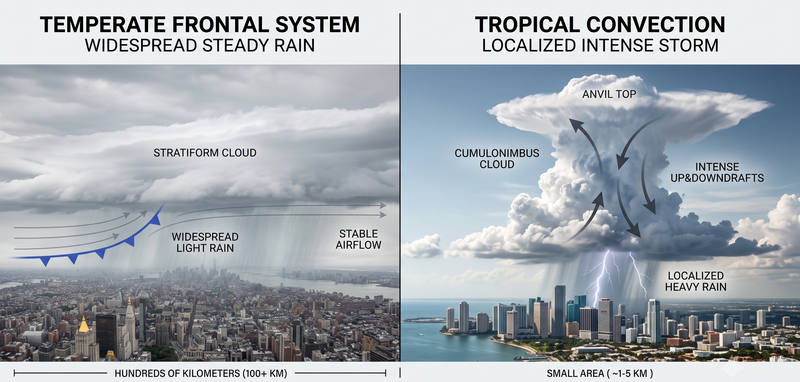
In Southeast Asia, ignoring the weather is a gamble that event planners are increasingly losing. Late-2025 climate modeling published by Zurich Resilience Solutions highlighted the escalating physical climate hazards affecting six major Southeast Asian cities—Singapore, Jakarta, Manila, Bangkok, Ho Chi Minh City, and Kuala Lumpur. These cities are the undisputed hubs for corporate gatherings in the region, yet they are uniquely exposed to sudden convective storms, extreme urban heat, and flash flooding.
When corporate event planners lack a dedicated meteorologist on staff, a simple, low-overhead weather workflow becomes critical. The goal for this scale of event is not extreme sophistication; it is coverage. Organizers need to ensure that the basic questions—Is this still going ahead? Does the backup plan need to activate? Who needs to be notified?—have clear, pre-defined answers, rather than being decided in the moment by whoever happens to notice the sky changing.
1. Right-Sizing the Plan to the Event
A half-day outdoor company gathering doesn't need a festival-scale contingency operation. It doesn't require a command center or a five-hazard matrix like a major construction site. What it actually needs is a small number of clear thresholds, a solid indoor or covered backup option, and exactly one person with the clear, unquestioned authority to make the call.
The threshold itself does not need to be elaborate to be highly effective. For most corporate events in Southeast Asia, you only need to manage the two hazards most likely to force a sudden pivot: heavy rain and lightning.
- The Rain Threshold: Establish a specific rainfall intensity level that automatically triggers the indoor contingency. It takes the emotion and debate out of the decision. If the forecast indicates rain exceeding your threshold during the setup or execution window, the trigger is pulled.
- The Lightning Threshold: Lightning is a zero-tolerance safety hazard. A lightning-proximity distance (e.g., a strike detected within a 10km radius) must instantly pause any outdoor activity. This protects attendees and staff from a hazard that often precedes the actual rain.
By focusing strictly on these two metrics, event planners can safeguard a half-day event without being overwhelmed by data they don't have the time to process.
2. Coordinating with Vendors in Advance
One of the most common points of failure during a weather pivot isn't the organizer's decision—it is the supply chain's inability to execute it. Catering, AV, and furniture vendors all operate with their own weather-related constraints. High winds can turn temporary marquees into hazards; heavy rain introduces severe electrocution risks for AV setups; and extreme heat can compromise food safety protocols for caterers.
Sharing a simple, agreed-upon threshold plan with vendors ahead of time is the easiest way to avoid last-minute scrambling.
This does not require a massive, formal integration process. It is a short, precise conversation during the contracting phase: telling an AV supplier in advance exactly what rain level will trigger a move indoors, and confirming they can execute that move within a defined 45-minute window. This simple alignment prevents the nightmare scenario where an organizer makes the correct safety call, only to discover their primary vendor is not actually equipped or prepared to follow it.
3. Backup Plans That Don't Feel Like a Downgrade
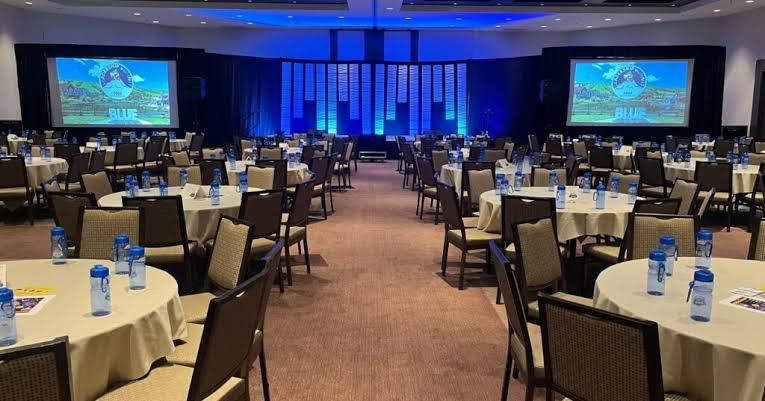
The best backup plans are designed well in advance, not improvised on the fly. An indoor contingency that is planned with the exact same care as the outdoor primary vision tends to land far better with attendees than an obvious, stressful last-minute pivot.
In the corporate events industry, attendee perception tracks preparation far more closely than it tracks the weather itself. A backup indoor space that was clearly considered from day one—complete with proper signage, thoughtful seating arrangements, and integrated AV—reads as the intended venue. Attendees will forgive the weather if they feel taken care of.
Conversely, a hastily repurposed office hallway with stacked folding chairs reads exactly as what it is: a failure to plan. Regardless of how beautiful the original outdoor concept was, the attendee's lasting memory will be the chaotic, uncomfortable reality of the downgrade. Integrating weather intelligence allows you to make the call to pivot hours in advance, giving your team the time required to set up the backup venue with the polish and professionalism your brand demands.
4. A Simple Dashboard Beats No Plan at All
For smaller events, organizers do not need a deeply integrated, complex software system. A straightforward, hyperlocal weather dashboard—checked by the lead organizer at specific, pre-determined set points before and during the event—is often the perfect level of investment.
Instead of relying on a generic consumer weather app that provides a vague 5km-radius forecast, event planners can use a purpose-built dashboard like Pluvia rAIn. This provides 100m-resolution forecasting, meaning you know exactly what is happening over your specific hotel lawn, rooftop garden, or community park.
This lighter-weight approach is a reasonable and highly effective choice for a single, one-off event. However, the calculus changes when an organization scales up its outdoor programming. If a company is running weekly outdoor team gatherings, a recurring community concert series, or multiple regional offsites, the "organizer-checks-a-dashboard" model begins to cost meaningful person-hours across the year.
5. Integration: What Event Organizers Actually Need to Know
For a genuinely one-off corporate retreat, the dashboard-checking approach described above is more than enough. Building anything further is not worth the effort or the budget.
But for organizations or agencies that run outdoor events regularly, stepping up to a slightly more integrated approach pays immediate dividends. A simple, one-time historical data pull for a specific venue can help event teams set sensible thresholds in advance. By analyzing the historical rain and wind patterns of a specific venue in Kuala Lumpur during November, for instance, an agency can establish baseline safety limits that are scientifically sound. This saves each individual organizer from having to re-derive reasonable rain and wind limits from scratch every single time they book that venue.
Pluvia’s API supports organizers at either scale. We offer a simple, highly accurate dashboard view for occasional planners who just need to check conditions before and during an event. For agencies and enterprise teams running events often enough that a threshold plan is worth setting up once and reusing globally, our API allows for seamless live and historical data pulls.
In Southeast Asia, you cannot control the monsoon season, the sudden heatwaves, or the convective storm cells. But with simple workflows and hyperlocal intelligence, you can absolutely control how your event responds to them.
About Pluvia: Pluvia.ai provides hyper-local weather and flood prediction APIs purpose-built for Southeast Asia. We deliver 100m resolution, 2-minute refresh rates, and physics-informed AI to help businesses operate safely and efficiently. Contact us at contact@pluvia.ai or visit pluvia.ai.
Call to action: See how easy it is to add hyperlocal weather monitoring to your next event — Try Pluvia rAIn today.